More beauty, skincare, supplement, and personal care brands are choosing small batch manufacturers to test new products and launch early SKUs.
This approach allows teams to refine formulas, check packaging compatibility, complete stability testing, and work with lower minimum order quantities before committing to larger runs.
Small batch production reduces operational risk and gives you a controlled way to validate your product before scaling.
In this article, we outline what small batch manufacturing means, the benefits it offers, how to choose the right partner, and the top small batch manufacturers to consider for your brand.
Key Takeaways:
Small batch manufacturing helps brands validate formulas, packaging, and documentation before scaling, reducing early operational risk.
Lower minimum order quantities help founders avoid excess inventory and make changes based on real performance.
Early runs receive tighter QC, including shade consistency, viscosity checks, and packaging fit, leading to more reliable first batches.
Controlled production simplifies documentation such as COAs, specs, and batch records, which supports retail and marketplace approvals.
Choosing the right partner requires assessing category expertise, testing capabilities, packaging compatibility, and the ability to scale to larger runs.
What Is a Small-Batch Manufacturer?
A small batch manufacturer produces lower-volume runs designed for R&D, pilot batches, and early-stage launches. Instead of requiring large minimum order quantities, they support controlled production that lets teams test formulas, packaging, and documentation in a real manufacturing environment.
The focus is on operational validation. Small batch partners help you confirm stability, viscosity, shade consistency, and packaging fit before you scale. They also make it easier to refine formulas, adjust ingredients, and resolve compatibility issues without risking high inventory or long delays.
This model supports skincare, cosmetics, supplements, and personal care brands that want predictable timelines, tighter quality control, and lower risk while building or expanding their product line.
Benefits of Working With Small-Batch Manufacturers
Small batch manufacturing supports early-stage brands with more flexibility and tighter operational control. Here are the key advantages:
Lower Minimum Order Quantities and Reduced Inventory Risk: You can launch with fewer units, avoid overstocking, and adjust your product earlier based on real performance instead of holding large amounts of unsold inventory.
Faster Iteration Cycles and Quicker Feedback Loops: Teams can refine formulas, packaging, or shades after each round of samples or pilot batches without waiting through long production timelines.
Easier Shade Matching and Formula Adjustments: Color cosmetics and skincare brands benefit from closer collaboration on pigment load, viscosity, texture, and ingredient tweaks before scaling to full batches.
More Attention to Quality Control During Early Runs: Small batch facilities typically run fewer SKUs at once, which allows more hands-on QC checks for stability, fill weight, packaging fit, and shade consistency.
Better Documentation Control: COAs, ingredient specs, label files, and batch records are easier to manage and update when production occurs in smaller, controlled cycles.
Less Pressure on Your Supply Chain: Lower material requirements reduce sourcing stress, simplify packaging procurement, and help you avoid long delays tied to hard-to-get components.
A Smoother Path to Retail Readiness: Early testing and controlled batches help you build the documentation and quality standards required for retailers or marketplaces later.
Stronger Support for Boutique or Multi-SKU Brands: Brands with many shades, scents, or small variations benefit from a partner who can handle frequent adjustments without pushing large production volumes.
With these benefits in mind, the next step is choosing a partner who can actually deliver this level of flexibility and control. Below are some of the most reliable small-batch manufacturers for growing brands.
Top 10 Small-Batch Manufacturers for Emerging Brands
These manufacturers support low-volume runs, pilot batches, and early-stage development across beauty, skincare, supplements, and personal care. Each option offers different strengths depending on your product category and operational needs.
1. Respect Manufacturing
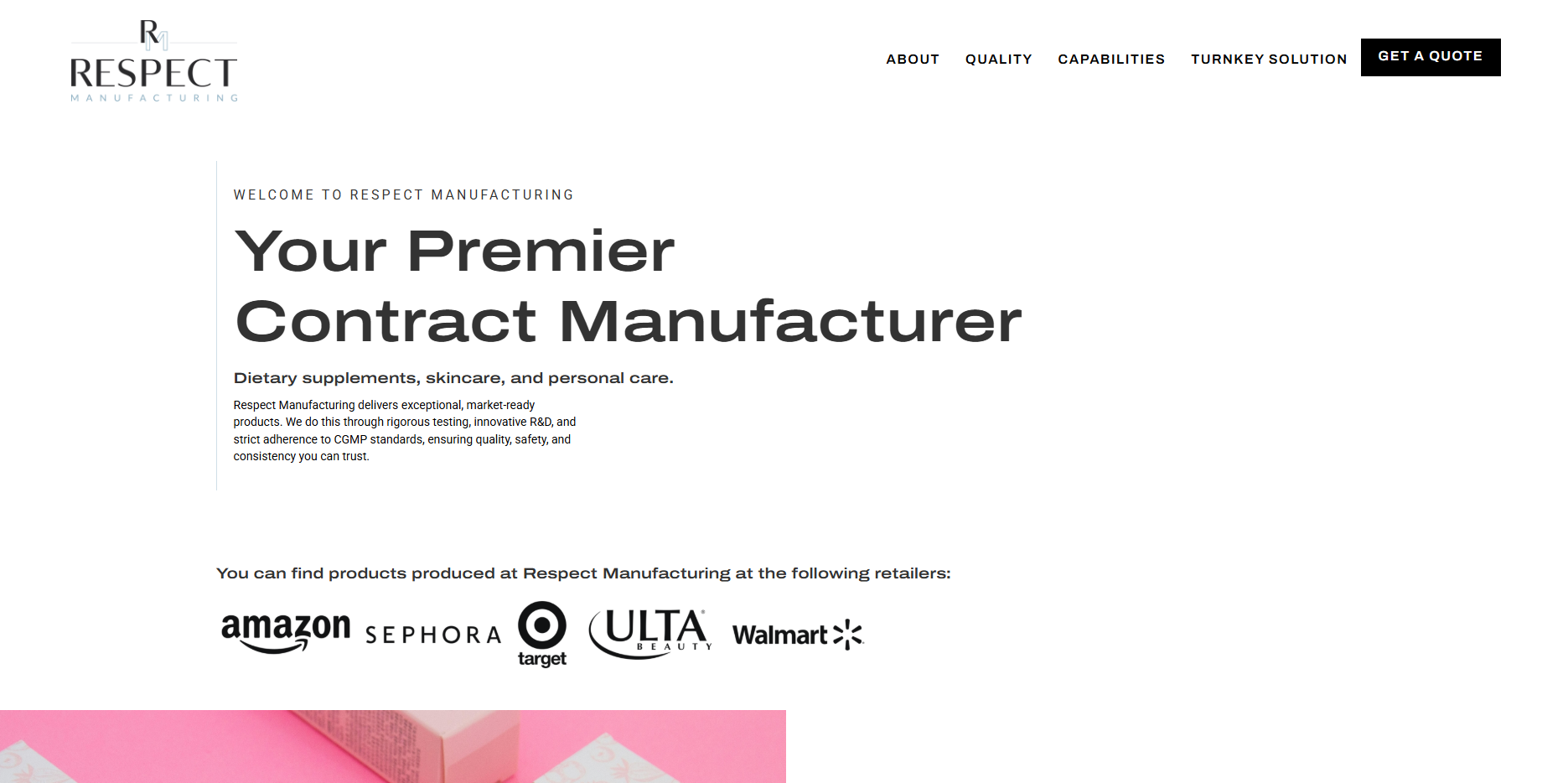
If you need a partner who can support small batch launches and scale with you as you grow, Respect Manufacturing is built for that. Our team can help you through every stage, including formulation support, stability testing, filling, packaging, and documentation for retail and marketplace requirements.
What makes this useful when you are launching or expanding is the level of control built into the process.
Every ingredient goes through inbound AQL checks, batches are tracked from start to finish, and stability programs confirm how your product performs over time. This gives you a predictable process instead of coordinating multiple vendors.
With Respect, you can focus on building your brand while the operational work behind consistent, compliant production is handled for you.
Key Offerings:
Small batch and full-scale manufacturing for skincare, cosmetics, supplements, and personal care
In-house R&D support to refine formulas and troubleshoot compatibility issues
Stability testing to confirm shelf life and formula performance
AQL quality checks for raw materials and finished goods
Automated production lines in an FDA-registered, CGMP-compliant facility
Packaging sourcing and assembly through CDW, including tubes, jars, bottles, and secondary packaging
Complete documentation and batch traceability for retail and online marketplaces
Best For: Brands that want a single, reliable partner who can support early testing, small batch runs, and future scale without requiring a manufacturer switch.
2. Cosmetic Solutions
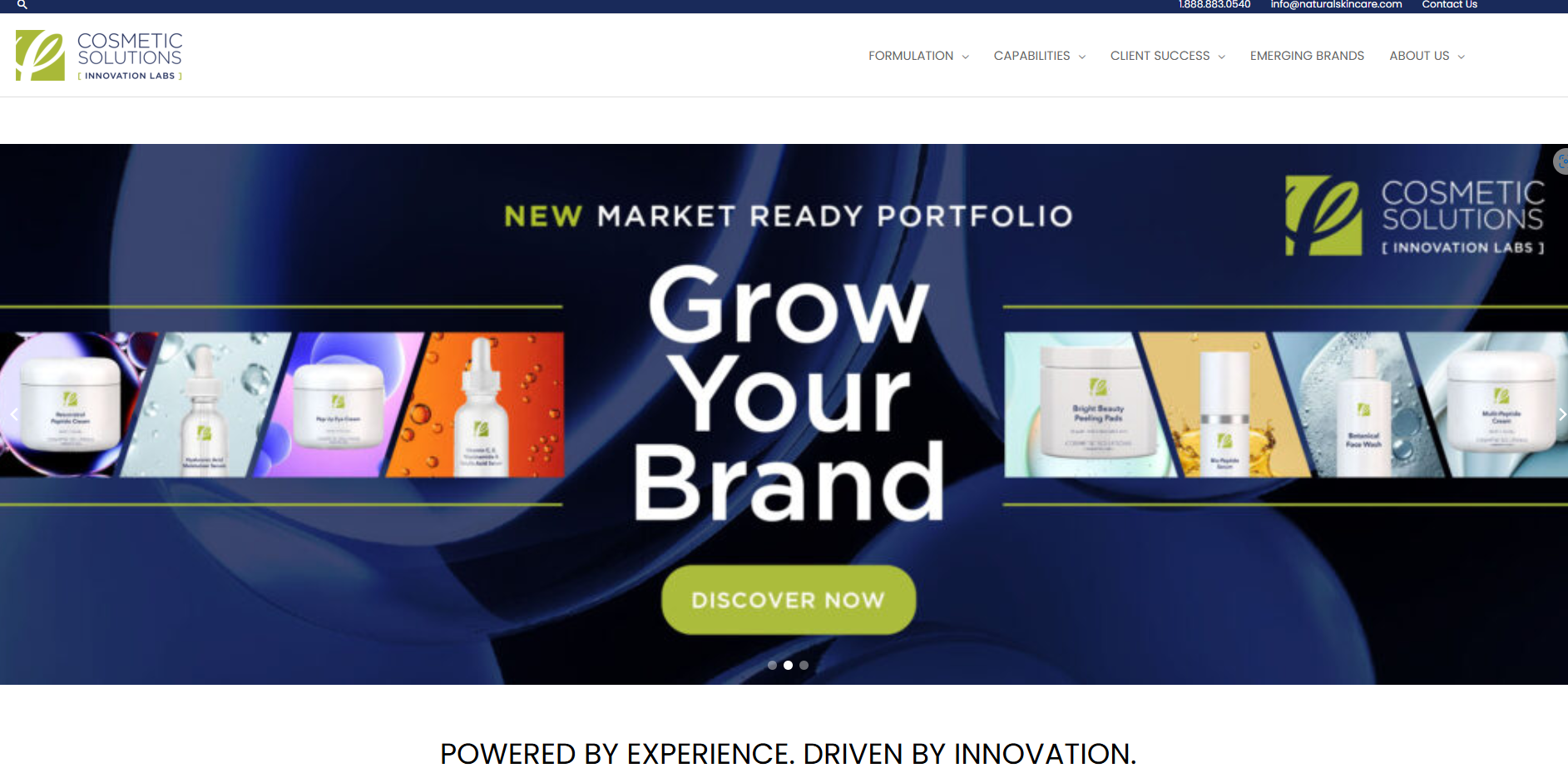
Cosmetic Solutions is known for performance-focused skincare built around active ingredients. Their small batch programs allow you to test treatment-style formulas while getting the R&D and documentation support needed before scaling.
Key Offerings:
White label and custom formulation services
Access to performance actives and clinical-style ingredient systems
Filling and packaging for serums, treatments, and lotions
Best For: Skincare brands launching serums, exfoliants, or targeted treatment products that require R&D guidance and structured documentation.
3. The Evans Group (TEG)
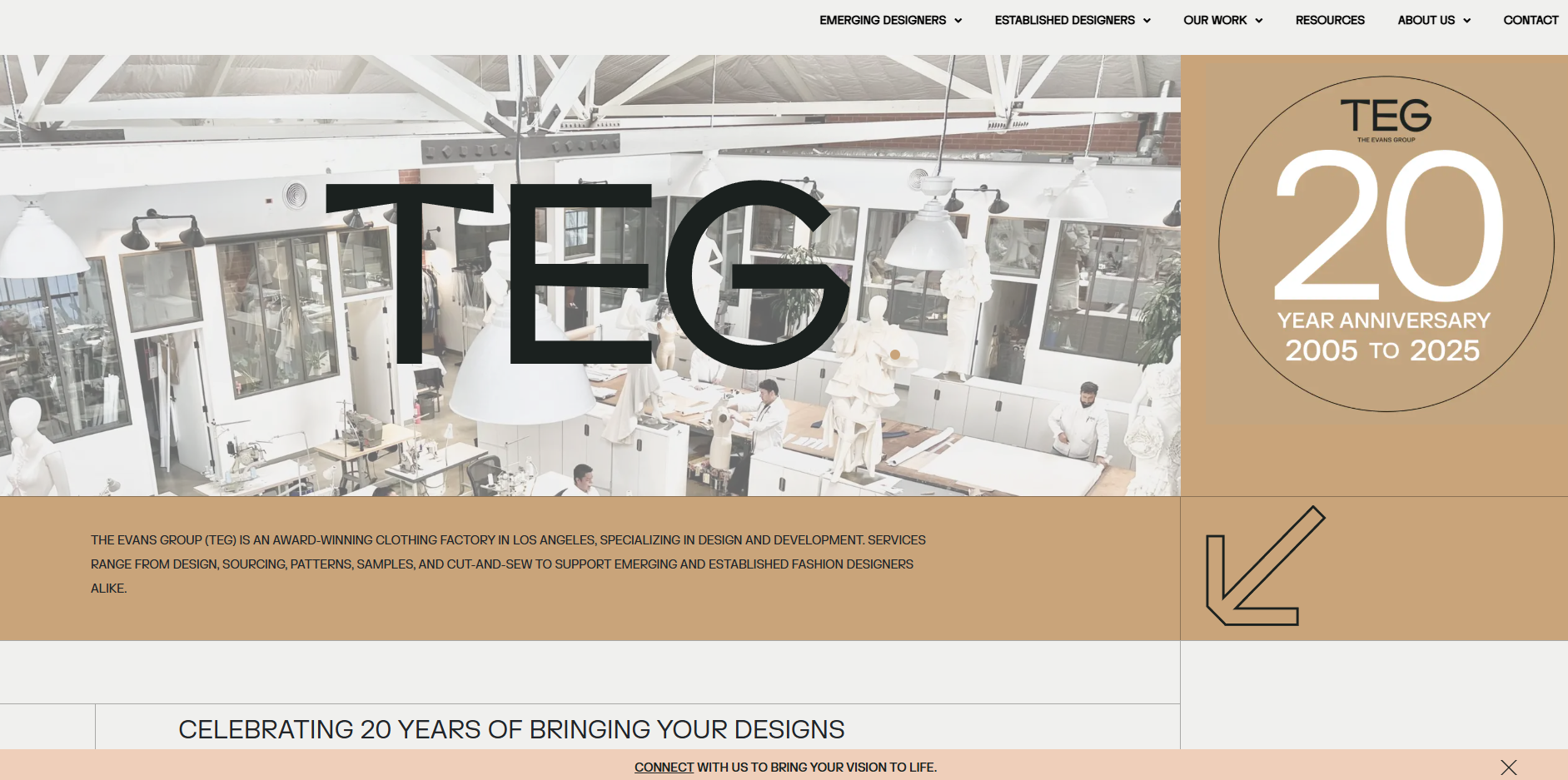
The Evans Group offers small-batch apparel manufacturing for emerging and independent fashion brands. Their studio supports low-volume runs, detailed craftsmanship, and hands-on development for teams that need design-to-production guidance.
Key Offerings:
Support for designer-led collections and boutique labels
Patternmaking, sample development, and technical design
Cut-and-sew services for ready-to-wear fashion
Best For: Founders launching their first clothing line or brands testing new apparel SKUs with premium small batch support.
4. RainShadow Labs
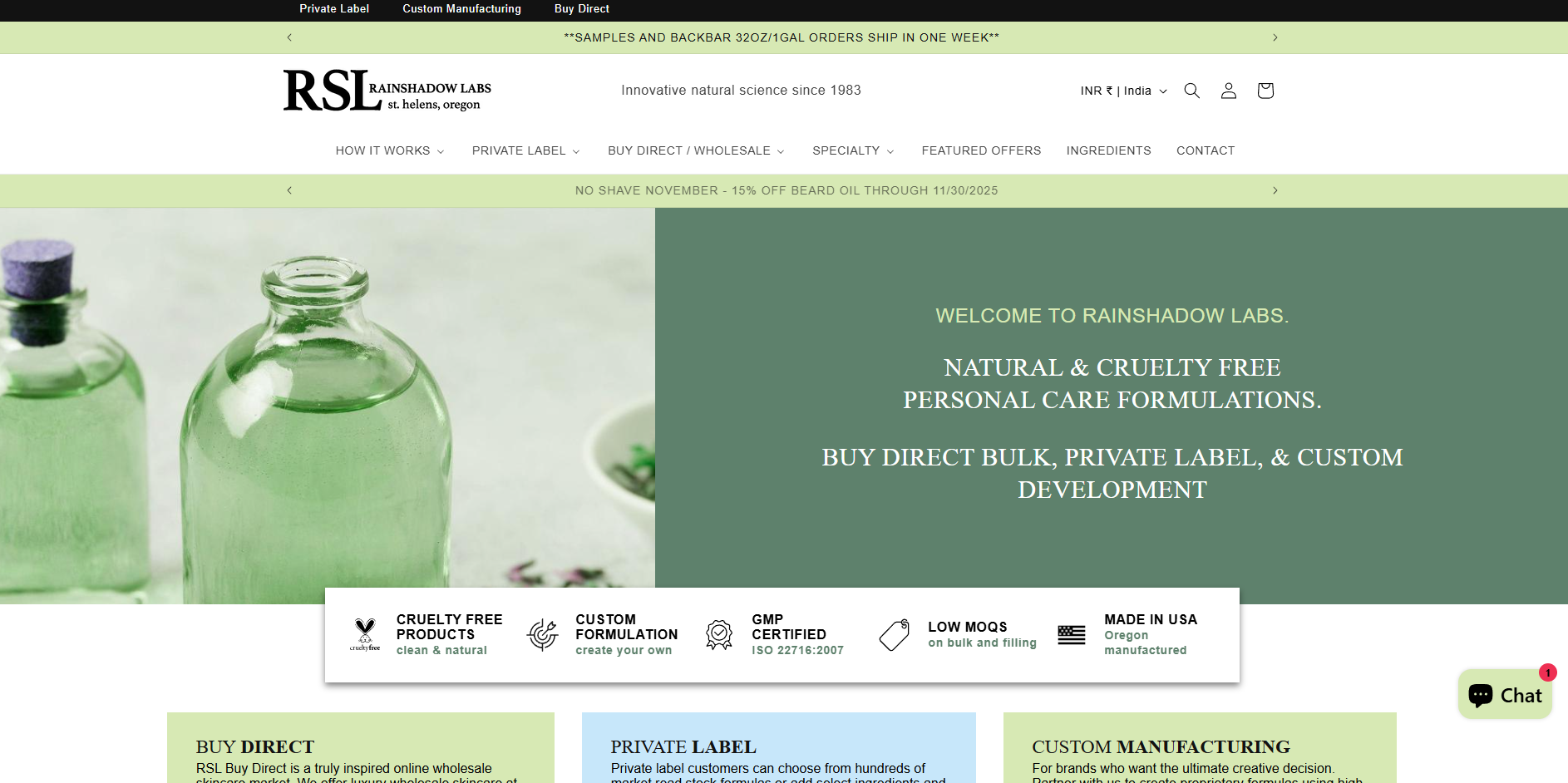
RainShadow Labs specializes in natural, botanical-forward skincare and offers a wide range of customizable base formulas. Their small batch services help founders validate formulas and packaging without committing to large runs.
Key Offerings:
Customizable natural and organic skincare bases
On-site filling and packaging for lotions, serums, and body care
Support with essential documentation and ingredient transparency
Best For: Clean beauty brands launching natural or organic skincare products with low MOQs and stable base formulas.
5. Radical Cosmetics
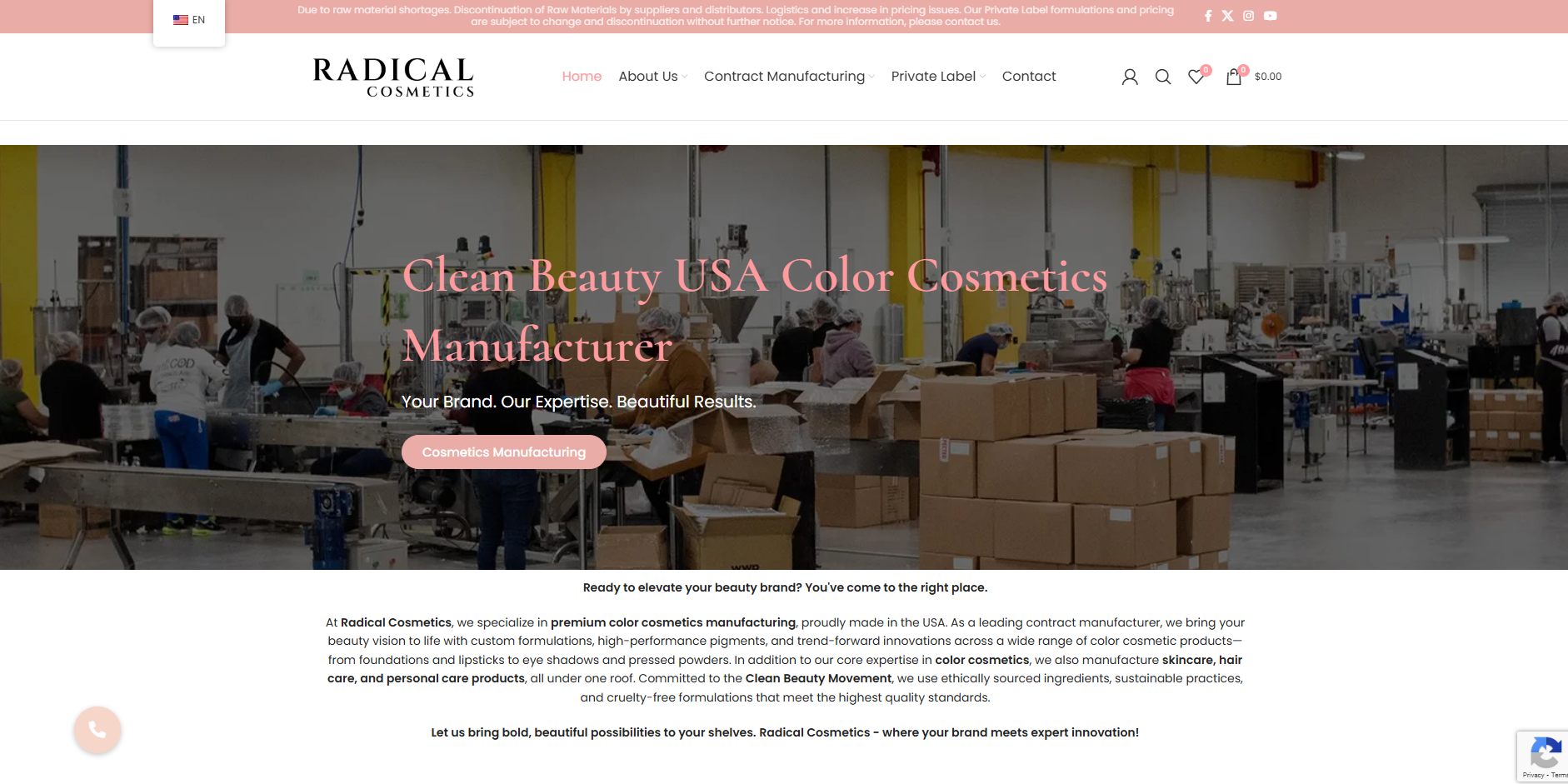
Radical Cosmetics specializes in color cosmetic manufacturing and offers strong pigment-handling capabilities. They assist founders with shade matching, dispersion stability, and consistency across early runs.
Key Offerings:
Small batch lip, eye, and complexion color cosmetics
Expertise in pigment dispersion and texture uniformity
Shade matching for glosses, lipsticks, and liquid pigments
Best For: Makeup brands producing lip gloss, lipsticks, or other pigment-heavy cosmetics that require precise color development.
Also read: How to Start a Makeup Line: A Step-by-Step Guide
6. Makers Nutrition
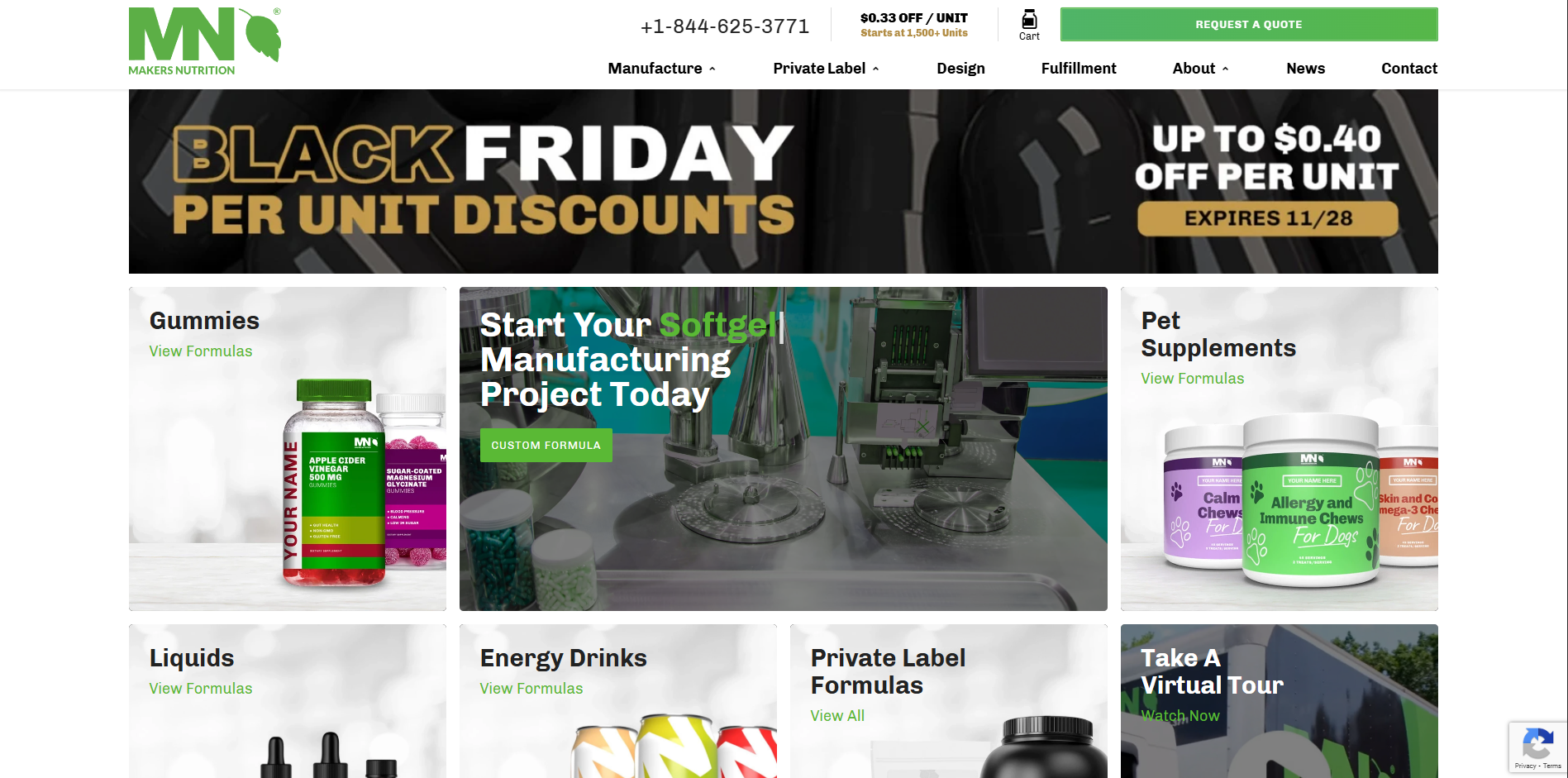
Makers Nutrition supports supplement and wellness brands with low-volume production across multiple formats. Their small batch services help founders test taste, texture, and format compatibility before scaling.
Key Offerings:
Powder blends, drink mixes, and capsule production
Flavor development and formulation refinement
COA documentation and quality checks
Best For: Founders launching new supplement SKUs who need pilot runs, flavor testing, and complete documentation before large-scale production.
7. Appareify
Appareify offers small batch apparel manufacturing with a focus on precision, fit, and reliable turnaround. They support brands through sampling, pattern development, and low-volume production, which is helpful for early collections or limited releases.
Key Offerings:
Patternmaking, tech pack support, and sample development
Cut-and-sew production for apparel basics and premium garments
Fabric sourcing guidance and quality control checks
Best For: Fashion brands that need dependable small batch production for new collections, capsule drops, or early-stage apparel testing.
8. Pure Earth Labs
Pure Earth Labs focuses on natural skincare and personal care products with clean, simple formulations. Their small batch model supports founders who want botanical or minimal-ingredient products without committing to large production runs.
Key Offerings:
Customizable natural skincare bases
Formulation refinement for botanical and clean-label products
Filling and packaging for lotions, cleansers, and body care
Best For: Brands creating plant-based, gentle skincare or personal care products that need low-volume runs and straightforward formulation support.
9. Beehive Botanicals
Beehive Botanicals is a long-standing natural products manufacturer specializing in bee-derived ingredients and herbal supplements. They offer small batch runs that help brands test wellness formulations without committing to large volumes.
Key Offerings:
Capsule and powder manufacturing for herbal and bee-based supplements
Ingredient sourcing for propolis, royal jelly, and botanical extracts
In-house testing for purity, potency, and microbial safety
Best For: Brands developing natural wellness formulas, herbal blends, or bee-derived supplement products that require reliable sourcing and low-volume production.
10. Vitelle Labs
Vitelle Labs specializes in professional-grade skincare with a strong focus on esthetician and spa brands. Their small batch capabilities make it easy to test advanced formulas and launch treatment-focused products without large commitments.
Key Offerings:
Custom and private label skincare formulations
Professional-strength serums, creams, and treatment products
Filling and packaging for spa and clinic-ready SKUs
Best For: Skin professionals and beauty brands launching targeted, performance-driven skincare that requires clean documentation and low-volume production.
Each manufacturer brings different strengths, so the real question is which partner aligns with your product, timelines, and quality requirements. The next section breaks down the factors to compare before making a decision.
How to Choose the Right Small-Batch Manufacturer
Selecting a small batch manufacturer is not just about finding low MOQs. The right partner must support your category, documentation needs, packaging requirements, and long-term growth. Evaluating these factors early helps you avoid delays, inconsistent batches, or costly rework.
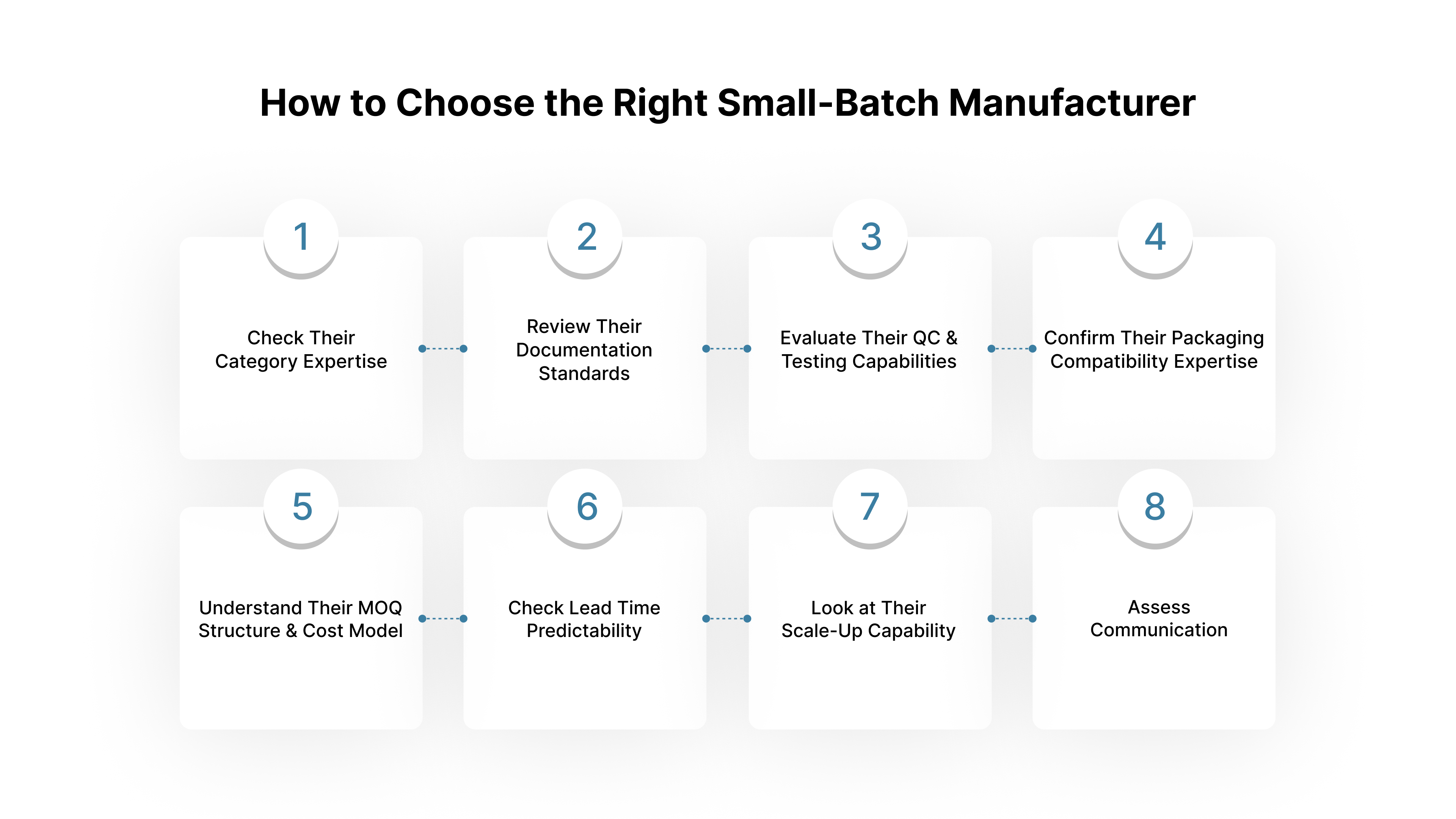
1. Check Their Category Expertise
A manufacturer experienced in your product type will understand formulation behavior, packaging fit, and testing requirements.
Skincare needs emulsion stability and preservative systems
Cosmetics need pigment dispersion and shade matching
Supplements need identity, purity, and potency testing
Choose a partner who routinely manufactures products similar to yours.
2. Review Their Documentation Standards
Early batches must be backed by proper paperwork. At minimum, expect:
COAs for raw materials and finished goods
Batch records
Ingredient specifications
Label review support
Weak documentation slows down retail onboarding and marketplace approvals.
3. Evaluate Their QC and Testing Capabilities
A strong small-batch manufacturer should support:
Stability and compatibility testing
Shade or flavor consistency checks
Viscosity and texture controls
Packaging integrity tests
These capabilities help you validate your product before scaling.
4. Confirm Their Packaging Compatibility Expertise
Packaging is a common point of failure during early runs. Your manufacturer should assess:
Tube, pump, cap, or wiper fit
Material compatibility with your formula
Fill weight and viscosity behavior
This prevents leaks, clogs, or formula separation.
Also read: FDA Cosmetic Labeling Requirements Guide
5. Understand Their MOQ Structure and Cost Model
Small batch does not always mean cheap. Review:
MOQs for base formulas
MOQs for packaging components
Testing and filling fees
Storage or freight expectations
Transparent costs help you plan cash flow and avoid surprise charges.
6. Check Lead Time Predictability
Small batch manufacturers vary in speed. Ask for:
Average lead times for sampling
Production slot availability
Packaging-related delays
Reliable timelines help you plan launches more accurately.
7. Look at Their Scale-Up Capability
Your small batch partner should also be able to grow with you. Confirm:
Whether they offer higher-volume production
If processes and QC remain consistent across batch sizes
Whether documentation scales with production demands
This prevents the need to switch facilities mid-growth.
8. Assess Communication and Project Management
Clear communication matters as much as technical skill. Look for:
Fast response times
Clear requirements upfront
Structured onboarding
Transparent updates at every stage
Good communication keeps R&D, sampling, and production on schedule.
When these checks are in place, you are far better positioned to launch confidently and scale without costly operational setbacks.
Conclusion
Small batch manufacturing gives beauty, skincare, supplement, and personal care brands a controlled way to launch new products without committing to high MOQs or complex production cycles. When used correctly, it supports R&D, validates packaging, and helps brands refine quality before investing in larger runs. This approach reduces operational risk and builds a stable foundation for future scale.
Respect Manufacturing provides an integrated small batch to scale workflow that includes formulation support, testing, packaging compatibility, QC, and complete documentation. This structure helps founders move through development with fewer delays and a smoother path to market.
Work with Respect Manufacturing to launch and scale your products with consistent, compliant, and production-ready support.
FAQs
1. What qualifies as a small batch manufacturer?
A small batch manufacturer supports low-MOQ runs, pilot batches, and early-stage testing. They help brands refine formulas, packaging, and documentation before moving to larger production.
2. Are small batch manufacturers more expensive?
They can be slightly higher per unit because runs are smaller. The benefit is reduced inventory risk and fewer costs linked to rework, relabeling, or unused components.
3. What is a typical MOQ for small batch production?
MOQs vary by category and packaging type. Some runs start in the low hundreds, while others require a few thousand units, depending on the formula and components.
4. How do I know when to move from small batch to large scale?
You are ready to scale when QC is consistent, demand is predictable, supply chain timelines are stable, and packaging compatibility issues are resolved.
5. Do small batch manufacturers handle stability testing?
Many offer basic stability, compatibility, and packaging integrity testing. This helps validate performance before committing to larger runs.