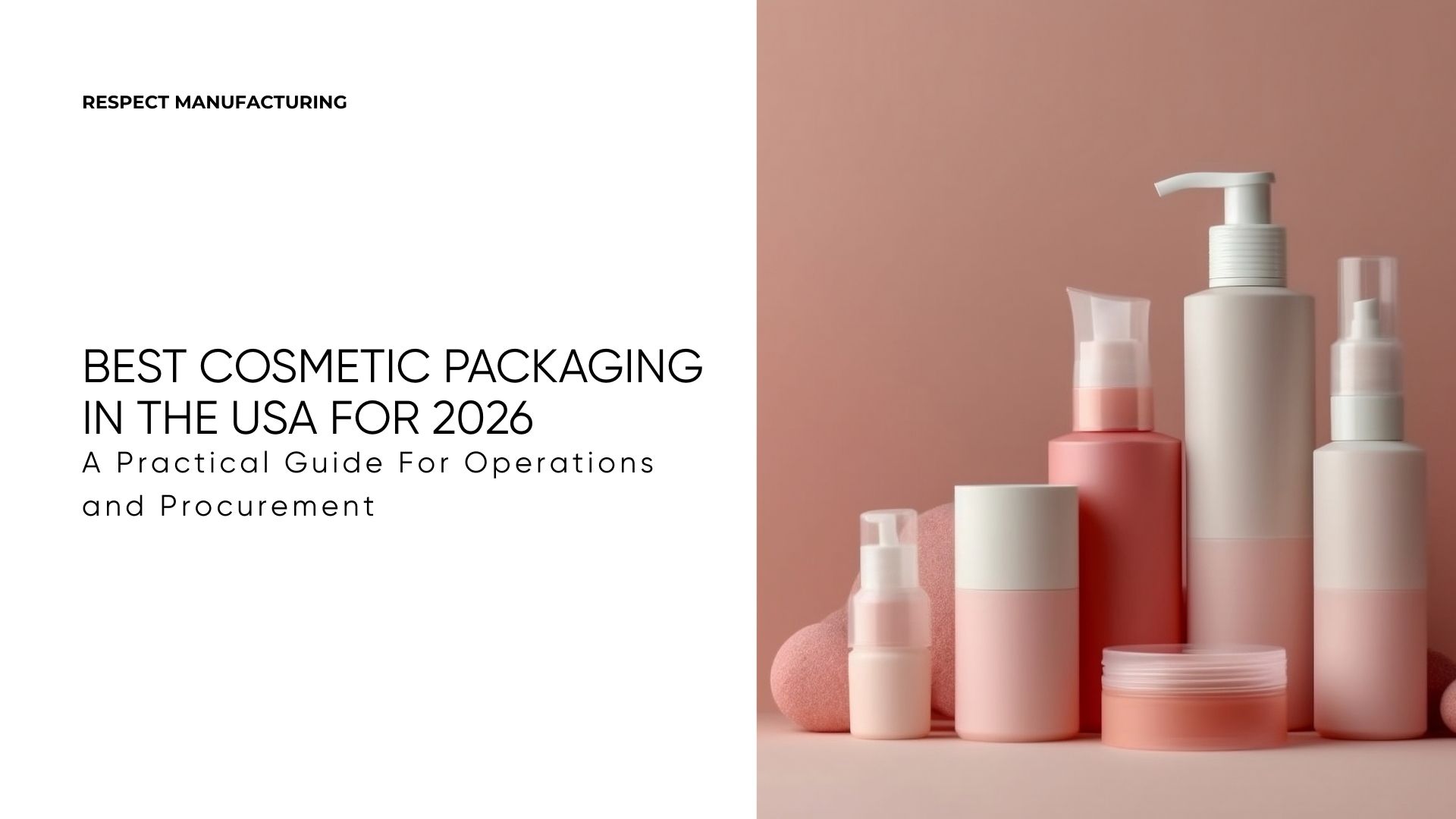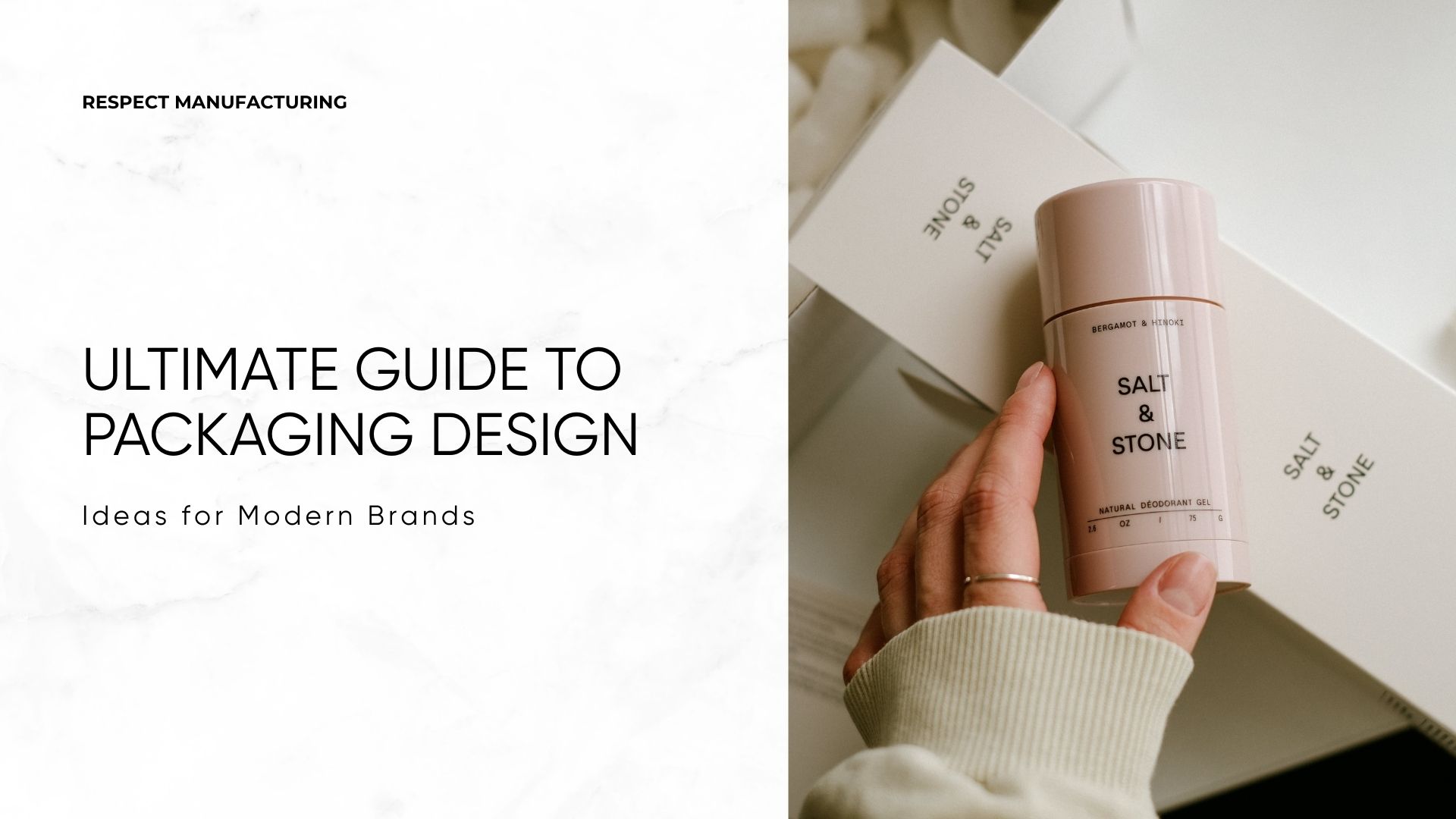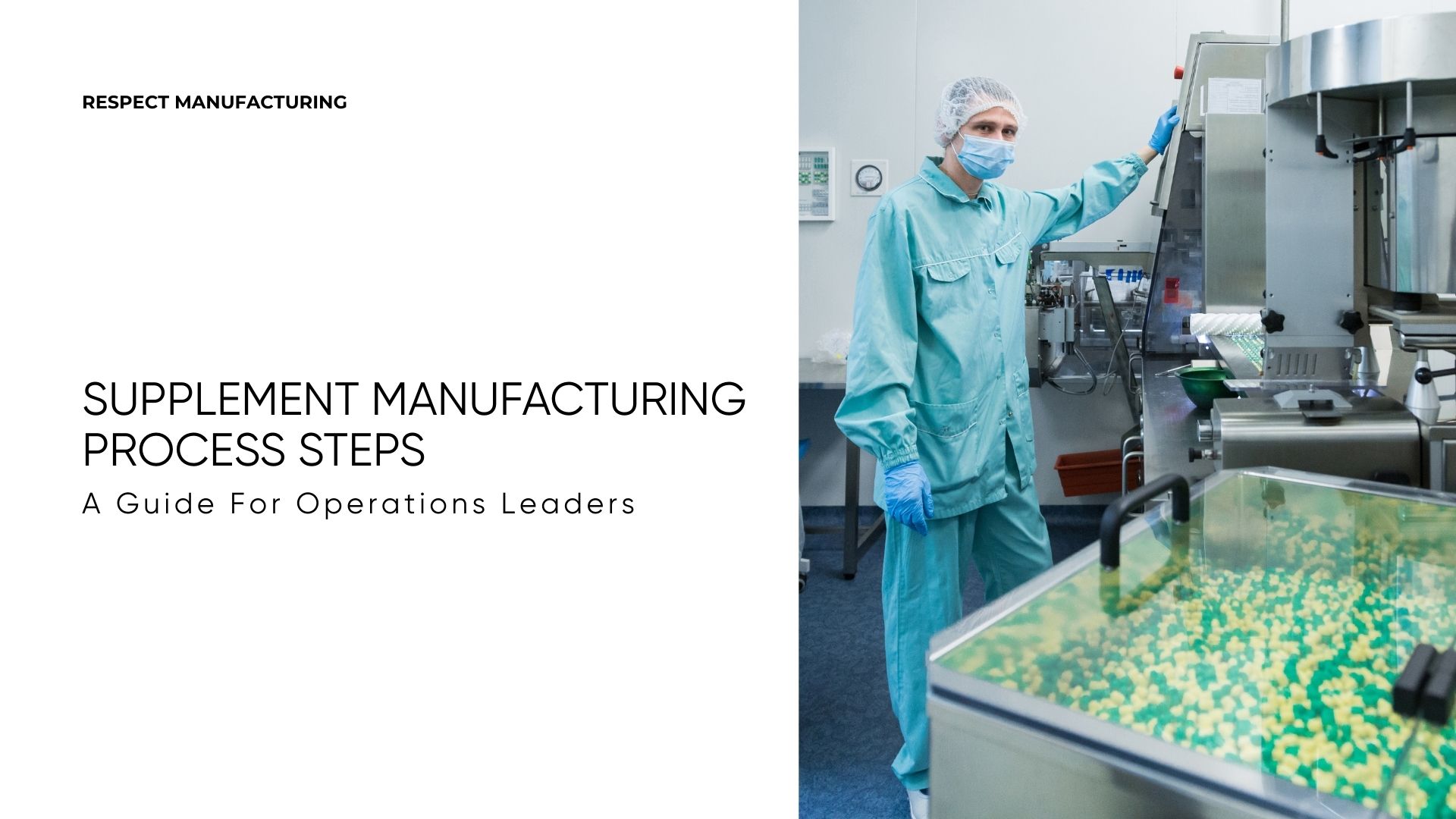
Packaging is often treated as a finishing task. But for fast-scaling nutraceutical, skincare, and personal care brands (typically generating $2 million–$100 million in revenue), the packaging production process is far more than assembly; it is a series of critical quality gates.
When you look at packaging production through the lens of a procurement head or operations manager, its main function is to shield the product, make sure of CGMP compliance, and achieve zero downtime on the automated filling line.
According to Grand View Research, the US flexible packaging market is expected to grow at a 5.2% CAGR between 2025 and 2030.
In this guide, we will detail the entire CGMP-compliant packaging and production process, breaking it down into one major 10-Step Operational Roadmap.
Key Takeaways
Choose the right packaging format based on product protection needs.
Validate materials early to reduce delays and prevent AQL failure.
Build compliant artwork and labels that meet FDA expectations.
Get a comprehensive knowledge on 15-step packaging production process.
Work with a turnkey partner to reduce downtime and improve lead time stability.
What is the Packaging Production Process?
The packaging production process is a regulated, multi-stage operation of transforming bulk product into a market-ready, sealed, labeled, and compliant consumer unit. In the context of supplements and personal care, it is a specialized service performed in a CGMP-certified environment, where the product is manufactured and containerized in a single integrated process.
This integrated process covers everything from initial dieline approval and component quality inspection to high-speed automated filling and final unit logistics.
Primary Objectives of Packaging Production
Protection: To maintain the stability and efficacy of the product (e.g., preventing moisture ingress).
Compliance: To meet all FDA labeling and tamper-evident regulations (21 CFR Part 111).
Efficiency: To maximize Throughput and minimize Downtime Reduction through automated package production.
Why Understanding the Packaging Process Matters
For key decision-makers, understanding the production of packaging is vital, as packaging is the number one source of line stoppages and recall risks outside of formulation errors.
Operational Benefit | Impact on Business KPI | Mitigation Through Process Control |
Protects Product Integrity | Sustains Stability Testing results and shelf life. | Using hermetic seals and appropriate barrier materials. |
Guarantees Line Speed | Maximizes Equipment Uptime and Throughput. | Strict AQL on incoming components to prevent jams. |
Mitigates Regulatory Risk | Prevents costly product recalls and FDA warning letters. | Accurate application of Lot/Expiry codes and label checks. |
Controls Unit Cost | Reduces Scrap Rate and product giveaway. | Calibrated fillers that maintain precise Net Content accuracy. |
Note: Packaging serves several key functions often summarized by the 5 P's: Product identification, Protection during transit, Promotion through design, Presentation to attract customers, and Price value communication.
With your value defined, the focus moves to execution. This 15-step roadmap guides you through each stage of a CGMP manufacturing environment.
The 15 Critical Stages of Packaging Production
The journey is broken into two phases: Pre-Production Strategy (Stages 1-5) and Operational Execution (Stages 6-15). A turnkey manufacturer like Respect Manufacturing manages these 10 steps as a single, accountable process.
Phase I: Pre-Production Strategy (Design & Specifications)
It focuses on the core decisions that shape your product, claims, budget, and manufacturing path. These choices set the direction for formulation, packaging, and long-term production costs.
Stage 1: Determine The Size, Shape, and Function of Your Package
Your packaging must protect the product and be easy for customers to use. To confirm you are making the right choices, consider:
Format needs: Does your product require a bottle, pouch, folding carton, or pressure-sensitive label? Will you need secondary packaging for retail display?
Size and shape: What dimensions fit your product and make it easy for retailers to stock?
Protection requirements: Will it be subject to shipping stress, temperature changes, or sensitivity to light, moisture, or air?
Customer experience: How should it be opened, resealed, stored, and handled?
This step can feel complex, but a capable packaging partner will help guide these decisions.
Stage 2: Material Selection and Sustainability Assessment
The materials you choose define product stability and brand alignment.
Action: Selecting materials (e.g., PET, HDPE, glass) based on Stability Testing requirements (moisture/oxygen barrier).
Checkpoint: If sustainability is important, review recyclable or eco-friendly options with your supplier.
Transition: Material choice determines the printing and production methods available in the next step.
Stage 3: Design Graphics and Artwork
Design must work with the physical package to perform well on the shelf. This step matters, with 72% of Americans, as per McKinsey, saying packaging design sways their decision to buy.
Action: Apply visual elements such as colors, finishes, and decoration that support brand identity.
Checkpoint: Use supplier dielines and print specs to ensure accurate layout and confirm color consistency through PMS matching.
Transition: With artwork aligned to the structure, move to prototype creation to validate real-world appearance.
Stage 4: Refine Your Packaging With Prototypes
Prototypes are high-quality mockups used to validate design and material choices before full commercial commitment.
Action: Create a physical mockup to test how artwork and materials translate beyond the screen.
Checkpoint: Review print clarity, finishes, and tactile elements to confirm the final look and feel.
Transition: A validated prototype speeds stakeholder approval and prepares the project for commercial production.
Stage 5: Design Handover and Regulatory Approval
This step confirms the market-facing design is technically viable and legally compliant.
Action: Finalize technical specs such as dielines, and obtain quality/regulatory approval for all printed copy.
Checkpoint: Verify the Supplement Facts panel, disclaimers, and net content statements meet FDA requirements.
Transition: Once approved, the manufacturer can begin sourcing physical packaging components.
Also Read: Guidelines for FDA Cosmetics Compliance
Phase II: Operational Execution (Factory Floor to Shipment)
Phase 2 turns your concept into a market-ready product by defining your label, claims, packaging direction, and documentation. Strong preparation here prevents relabeling, rework, and production delays.
Stage 6: Material Sourcing and Vendor Vetting
The manufacturer sources all necessary primary packaging (bottle, jar, tube) that directly contain the product) and secondary packaging (such as labels, boxes, and inserts that provide protection and information), making sure of each component meets quality standards.
Action: Sourcing components based on the product's Stability Testing requirements (e.g., high-barrier plastics for moisture-sensitive products).
Checkpoint: Every vendor must be audited by the manufacturer. All material lots must arrive with a Certificate of Analysis (CoA) to verify composition and purity, reducing Supplier Risk.
Transition: Components are immediately placed in quarantine pending inspection.
Stage 7: Component IQC and AQL Inspection
All components are inspected before entering production.
Action: Incoming Quality Control (IQC) tests statistically sampled components using Acceptance Quality Limit (AQL) standards.
Checkpoint: Dimensional checks are critical. Incorrect threads or heights can jam equipment and cause downtime.
Transition: Only components that meet specifications are released to production inventory.
Stage 8: Pre-Production Setup and Line Clearance
Lines are prepared to prevent cross-contamination.
Action: Perform full cleaning and sanitation of all automated and product-contact areas.
Checkpoint: Quality conducts a formal Line Clearance and opens the Batch Record.
Transition: The line is confirmed clean and ready for batching.
Stage 9: Equipment Calibration and Fill Validation
The machinery is adjusted to make sure that accurate dosing and sealing for the specific product viscosity and component are achieved.
Action: Automated fillers are calibrated using sample runs to make sure the product is dispensed within the tight tolerance of the required Net Content (e.g., 100 grams ± 1%).
Checkpoint: Accurate filler calibration is the primary mechanism for protecting the Cost Per Unit (CPU) by eliminating product giveaway. The capper is also tuned for the correct torque.
Transition: Once the fill weight is validated, the high-speed package production can begin.
Stage 10: Primary Packaging Execution
The batch is filled, sealed, and coded under CGMP monitoring.
Action: Perform filling, sealing, and lot/expiry coding.
Checkpoint: IPC checks verify cap torque, net content, and print accuracy for traceability.
Transition: Sealed units move to secondary packaging.
Stage 11: Secondary Packaging and Unitization
The product receives its final market presentation components.
Action: Automated application of the final pressure-sensitive label, assembly of the folding carton or box, and insertion of any required leaflets or scoops.
Checkpoint: The labeling machinery is checked for correct alignment, as misaligned or wrinkled labels can lead to esthetic rejection and rework.
Transition: The fully packaged unit is prepared for final quality sign-off.
Also Read: Sustainable Packaging Design Ideas for 2026: A Practical Guide for Scaling Brands
Stage 12: Final QC and Regulatory Release
The most important step: the batch is formally released only after passing all integrity and potency checks.
Action: Pull samples for potency testing and packaging integrity checks.
Checkpoint: Quality reviews the complete batch record and signs off only if all standards are met.
Transition: Approved batches move into finished-goods inventory.
Stage 13: Order Fulfillment and Quantity Management (New Step)
This stage incorporates the commercial decision of placing the order.
Action: Set order quantities carefully to avoid overproduction or obsolete stock.
Checkpoint: Quantities must reflect market demand and supplier MOQ flexibility.
Transition: Released goods are stored for dispatch.
Stage 14: Warehousing and Inventory Management
The product is stored in a way that preserves its quality and shelf life.
Action: Move finished goods to temperature- and humidity-controlled storage.
Checkpoint: Inventory management systems track the product by Lot Number to make sure of FIFO (First-In, First-Out) procedures are followed, minimizing the risk of product expiring in the warehouse and preventing Scrap Rate.
Transition: The product is ready to be pulled for customer orders.
Stage 15: Logistics and Distribution Staging
The final administrative and physical preparation for the supply chain.
Action: Products are unitized onto pallets according to the client's specifications (e.g., for 3PL or Amazon FBA), and final logistics documents (Bills of Lading) are generated.
Checkpoint: Operations confirms pallet counts and lot assignments before release.
Transition: The turnkey manufacturer hands off the product to the logistics provider, concluding the packaging and production process with guaranteed lead time stability.
Scaling adds pressure on cost, quality, and lead time stability. Connect with Respect Manufacturing to optimize these stages with a single, CGMP-compliant partner.
Also Read: Guidelines for FDA Cosmetics Compliance
As your brand scales, the key differences between production models become crucial for controlling costs and quality.
Key Differences Between Small-Batch and Large-Scale Packaging Production
When a brand scales (moving past the initial $2M revenue threshold), the approach to packaging and production must change dramatically. The decision to scale is a trade-off between volume flexibility and unit cost efficiency.
Feature | Small-Batch Production (Startup & Niche) | Large-Scale Production (Scaling Brand) |
Cost Structure | Higher Cost Per Unit (CPU) due to higher labor and lower component bulk discounts. | Significantly lower CPU due to economies of scale and high Throughput automation. |
Equipment | Semi-automatic fillers; relies heavily on manual intervention. | Fully automated stainless steel lines |
Sustained growth requires a manufacturer built for volume and quality. Your last step is assessing whether they can support long-term operations.
How to Evaluate and Choose the Right Packaging Manufacturer
Choosing a partner is the single most important decision for protecting your brand's growth and Cost Per Unit. The Founder/CEO must look for a partner that solves for complexity, not just price.
A. Compliance and Quality Assurance
CGMP Documentation: Do they maintain pristine, easily traceable Batch Records? Request an example record and audit their Line Clearance procedures. Failure here is a failure of compliance and creates unacceptable supplier risk.
IQC and AQL Program: Ask specifically how they test for component dimensional tolerance. A manufacturer who relies solely on the vendor's CoA for components is increasing your line risk. They must perform in-house AQL testing.
Traceability Mandate: Can they trace every single product unit back to the exact lot number of the primary component (bottle, cap) and the specific raw material lot? This full batch traceability is essential for surgical recalls.
B. Operational Capacity and Model
Scale Capability: Can their automated lines support your required throughput and future 5x volume growth?
Turnkey Model: Do they manage formulation, manufacturing, packaging, and logistics under one system to reduce operational complexity and improve lead time stability?
Format Flexibility: Can they run multiple packaging formats, such as bottles, jars, stickpacks, and sachets to support new SKUs?
By selecting a partner that is technically excellent and strategically aligned, you transform the complex packaging production process into a controlled, predictable asset for your growing brand.
Partnering with Respect Manufacturing
For brands focused on quality, the complexity of the packaging production process should not translate into Operational Complexity for your internal team. Respect Manufacturing turnkey model is engineered to manage all 15 steps effortlessly, eliminating the multi-vendor coordination challenges that slow down growth.
Operational Pain Point | Respect Manufacturing's Solution | Direct Operational Impact |
Multi-Vendor Complexity | Turnkey Model managing R&D, sourcing, IQC, and final logistics. | Drastically reduces operational complexity and management time. |
Downtime & Scrap Rate | Rigorous AQL inspection and automated lines for high Throughput. | Minimizes component failure and maximizes Yield Improvement. |
Compliance Risk | CGMP-certified, FDA-registered facility and mandated full batch traceability. | Guarantees audit readiness and eliminates legal Supplier Risk. |
Time-to-Market Delays | ntegrated scheduling and component control across all stages. | Accelerated Lead Time Stability and predictable delivery schedules. |
By choosing a partner that treats the packaging and production process as a core component of quality control, your brand can confidently scale.
Optimize Your Packaging Production Now! Stop compromising quality for speed. Partner with Respect Manufacturing, a CGMP-certified U.S. manufacturer, to improve your lead time stability and yield improvement today.
Conclusion
The intricate packaging production process is where quality control meets market readiness. For high-growth brands in the nutraceutical and personal care sectors, treating packaging as a strategic operational asset, not just a cost center, is non-negotiable.
Every step, from IQC to final coding, affects risk and yield improvement. A turnkey model is the most dependable way to maintain stable lead times.
Respect Manufacturing's commitment is to eliminate the costly accountability gaps that result from managing a fractured supply chain. We transform the complex 10-step roadmap into a single, cohesive, and predictable process, making sure that your brand scales efficiently and compliantly.
Ready to utilize your packaging production as a competitive advantage? Contact us to understand your next packaging project and optimize your packaging production now.
FAQs
1. What is the biggest threat to automated line speed, and how do I prevent it?
Incorrectly sized packaging components cause equipment jams and downtime. Use manufacturers who perform strict AQL checks on every incoming component lot.
2. How does a turnkey manufacturing model improve Lead Time Stability?
By controlling all stages under one schedule, a turnkey partner eliminates vendor handoff delays and keeps production steps aligned, resulting in more predictable lead times.
3. What is the main financial difference between small-batch and large-scale production?
Small batches spread fixed changeover and cleaning costs across fewer units, raising CPU. Large-scale runs keep lines operating continuously, lowering CPU and improving margin.
4. What CGMP proof should my manufacturer provide to confirm product quality and safety?
You should receive a complete Batch Record for every run. It must show ingredient and packaging CoAs, all in-process checks, equipment logs, and final QA approvals to confirm traceability and compliance.