Selecting the best cosmetic packaging today is more than a design decision. Many founders, procurement leads, and operations teams feel the pressure of rising material costs, new MoCRA requirements, freight delays, and the need to balance esthetics with real manufacturing constraints.
We understand that managing these complex challenges can feel overwhelming, especially when balancing compliance, cost, and brand identity under tight timelines.
As reported in the Biological Forum, 59% of participants indicated that packaging plays a decisive role in their purchasing choices. Packaging affects cost per unit, scrap rate, equipment uptime, and overall customer satisfaction, so the impact goes far beyond the shelf.
This guide breaks down the best cosmetic packaging ideas for 2026 with a practical, KPI-driven approach that helps teams strengthen product performance across production, logistics, and compliance.
Key Takeaways
Prioritize mono-material designs and high PCR content to reduce scrap rate and lower cost per unit.
Use standardized refill pod formats to support smoother filling and higher Equipment Uptime.
Add QR codes or NFC elements to improve traceability and reduce Supplier Risk.
Allocate label space for MoCRA disclosures to avoid compliance delays or relabeling issues.
Choose minimalist luxury formats that reduce decoration complexity and support faster Throughput.
Why Packaging Matters Beyond Shelf Appeal
For growing skincare and wellness brands, packaging influences production stability just as much as branding and design.
A. Packaging as a Functional and Compliance Tool
The main role of packaging is to protect the formula. Light-sensitive ingredients, such as vitamin C or retinol, need opaque, UV-safe components to prevent oxidation. This supports stability testing results and helps maintain overall product yield.
Packaging must also support:
Product Integrity: Protects against air, moisture, and contamination, which is important under cGMP expectations.
Regulatory Accuracy: Labels must include MoCRA-required information and adverse event contact details.
E-commerce Durability: Stronger secondary packaging reduces breakage and return rates.
Once the role of packaging is clear, the next step is evaluating the factors that shape compatibility, cost, and line performance.
Key Factors When Selecting the Best Cosmetic Packaging
The best packaging strikes a balance between branding and manufacturing predictability.
Packaging Factors and KPI Impact
Factor | Operational Consideration | KPI Impact |
Product Compatibility | Chemical inertness of the material (e.g., no reaction with pH or solvents). | Scrap Rate (due to material breakdown), Yield Improvement. |
Dispensing Fit | Choosing the correct pump/dropper/sprayer for viscosity and dosage control. | Customer Returns, Cost Per Unit (due to over-dispensing). |
Fill Line Performance | Component tolerances, size, and rigidity for high-speed automated lines. | Equipment Uptime, Downtime Reduction, Throughput. |
Component Quality (AQL) | The manufacturer's adherence to Acceptable Quality Limit (AQL) checks on incoming packaging. | Lead Time Stability, Supplier Risk. |
End-of-Life Planning | Material choice for consumer recyclability or participation in refill programs. | Brand reputation, long-term sustainability targets. |
Note: If you want clarity on material compatibility, you can compare your options with how Respect Manufacturing tests components for AQL and fill line performance.
After identifying the decision factors, the next step is understanding how different materials influence durability, sustainability, and throughput.
Cosmetic Packaging Materials and Their Functional Role
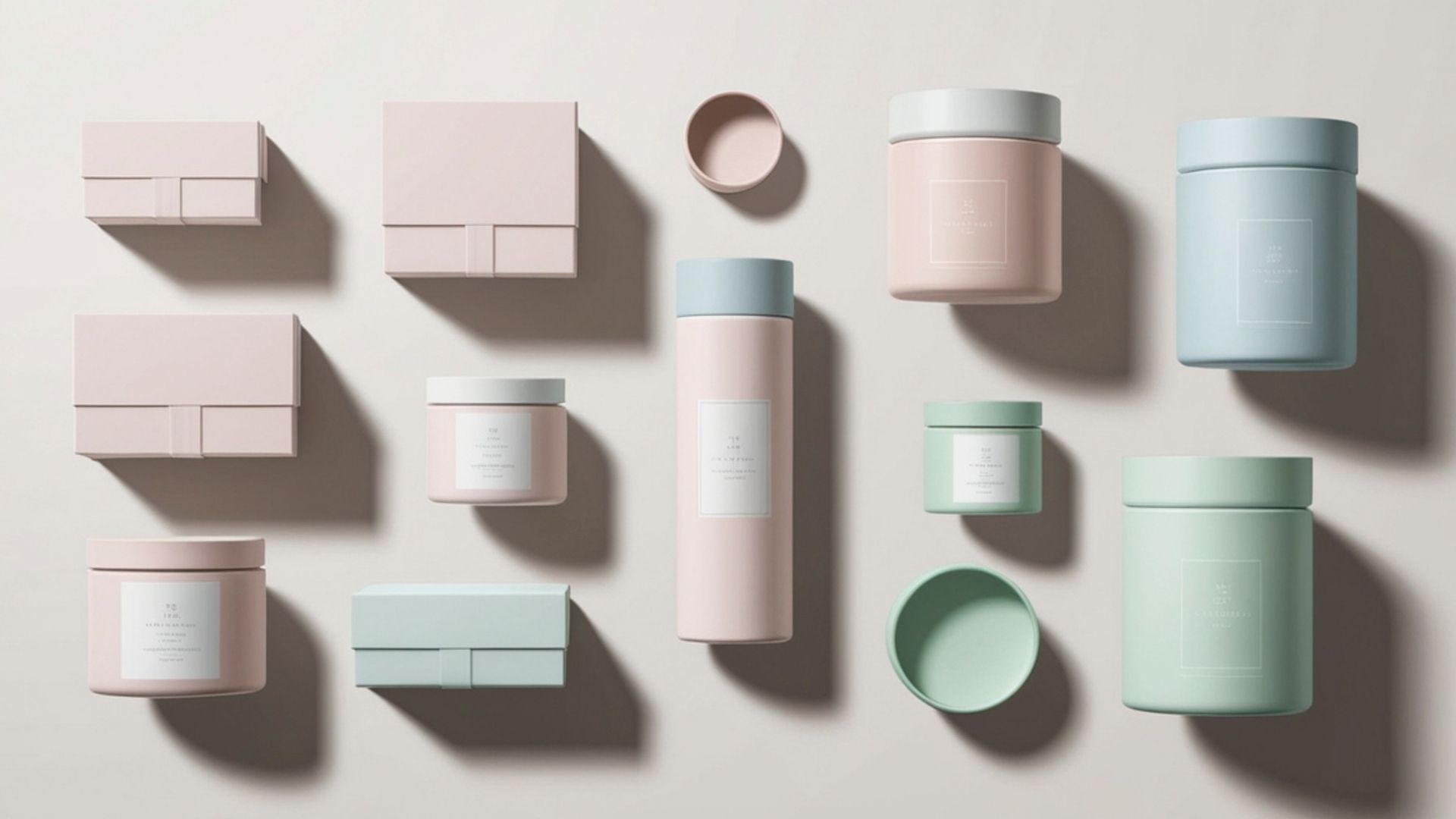
Material selection affects production speed, cost control, durability, and compatibility.
A. Selecting the Right Material
Material Type | Advantages (KPI Focus) | Best for Product Type | Operational Drawbacks |
HDPE/PET (Plastics) | Lightweight, durable, low cost per unit, and supports high throughput. | Lotions, shampoos, and body washes (mass market). | Lower premium perception, less chemical resistance than glass for some solvents. |
Glass | High luxury perception, excellent chemical inertness, infinitely recyclable. | High-end serums, essential oils, and fragrances. | High logistics cost (weight), increased scrap rate risk (breakage), and slower filling line speed. |
Aluminum | Excellent barrier to light/air, infinitely recyclable, premium feel. | Tubes for high-active creams and aerosol sprays. | Must be lined/coated for chemical protection (acidic or high-salt formulas). |
PCR Plastics | Meets sustainability targets, mitigates virgin material supplier risk. | Skincare and body care (where perfect clarity is not essential). | Inconsistent color/clarity requires strong AQL checks on incoming resin. |
Note: According to Fortune Business Insights, the global cosmetic packaging market is expected to grow at a 4.82% CAGR between 2025 and 2032.
B. Sustainable Materials for 2026
Sustainability has moved from branding to measurable operational planning.
Mono-Material Systems: Simplify sorting and recycling.
PCR Content: Stabilizes cost by reducing reliance on virgin resin.
Refillable Systems: Reduce material per transaction and improve freight efficiency.
Bio-based Plastics: Lower carbon impact and offer added marketing value.
Also Read: FDA Cosmetic Labeling Requirements Guide
After selecting your materials, the next step is choosing a design direction that supports production speed and brand identity.
Packaging Design Trends for 2026
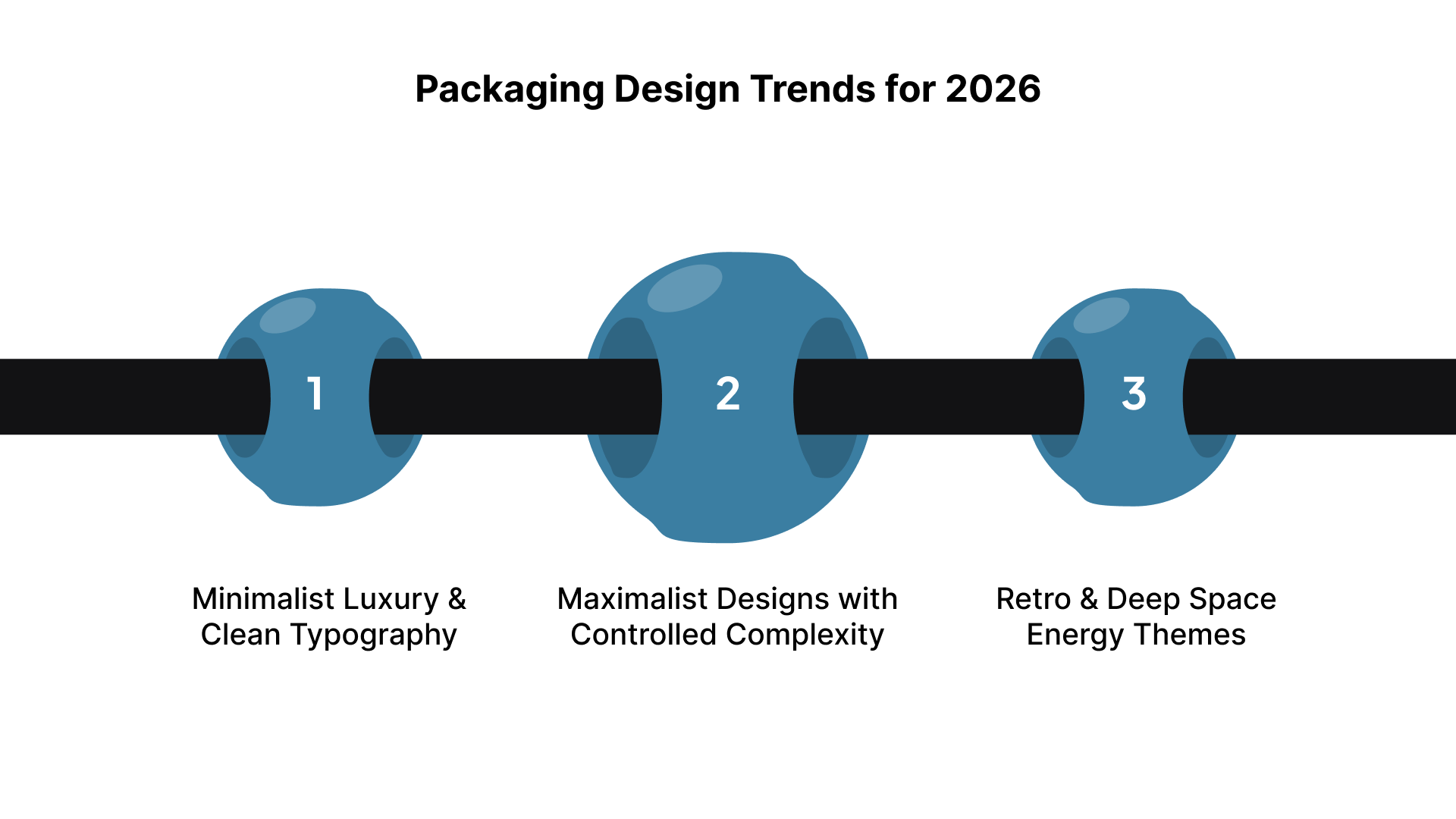
The best cosmetic packaging trends combine clear visual identity with manufacturing feasibility.
1. Minimalist Luxury and Clean Typography
Minimalist design emphasizes space, clarity, and hyper-legible type. This reduces misprints during high-speed label application and keeps decoration costs under control.
2. Maximalist Designs with Controlled Complexity
Bold patterns and richer colors work best on folding cartons, while primary containers remain simple. This helps maintain predictable CPU and fill-line stability.
3. Retro and Deep Space Energy Themes
These esthetics rely on color stories rather than complex structural changes. Iridescent films and holographic finishes must still pass AQL checks for adhesion, scuff resistance, and print integrity.
You can compare these design trends with the decoration and finishing options coordinated through Respect Manufacturing across bottles, jars, tubes, and cartons.
Design direction plays a role, but the packaging must also suit the formula itself. This is where user experience and unboxing readiness should be looked into.
Packaging User Experience and Unboxing Readiness
Packaging is often the customer's first physical interaction with your brand, so user experience affects far more than esthetics. When evaluating the best cosmetic packaging for 2026, teams should consider how each component performs during handling, unboxing, and daily use.
For procurement and operations teams, these elements influence measurable KPIs tied to product quality, customer satisfaction, and return rates.
1. First-Use Performance
The customer's initial interaction with the component must feel intentional and consistent.
Smooth pump actuation
Precision dosing for serums and actives
Tight but comfortable jar torque
Clean cap alignment with no wobble
Operational Impact: Poor first-use performance increases customer returns and can signal fill-line or AQL issues.
2. Unboxing Durability and Shipping Readiness
Online beauty sales continue to rise, increasing pressure on secondary packaging.
Folding cartons must resist crushing
Internal fitments should prevent movement in transit
Surface finishes must withstand scuffing and abrasion
Operational Impact: Better secondary packaging reduces transit breakage, improving customer satisfaction and lowering replacement costs.
3. Shelf Presence and Retail Expectations
Retail buyers expect packaging to speak clearly from a distance.
Highly readable typography
Clean front-facing claims
Barcode placement aligned with scanner requirements
Operational Impact: Shelf-friendly packaging simplifies retail compliance checks and reduces relabeling delays.
With user experience accounted for, the next priority is sustainability. Many materials and formats popular in 2026 help brands reach eco-targets without compromising line performance.
Also Read: The 10 Essential Stages of Skincare Product Development
Sustainability and Eco-Packaging Trends for 2026
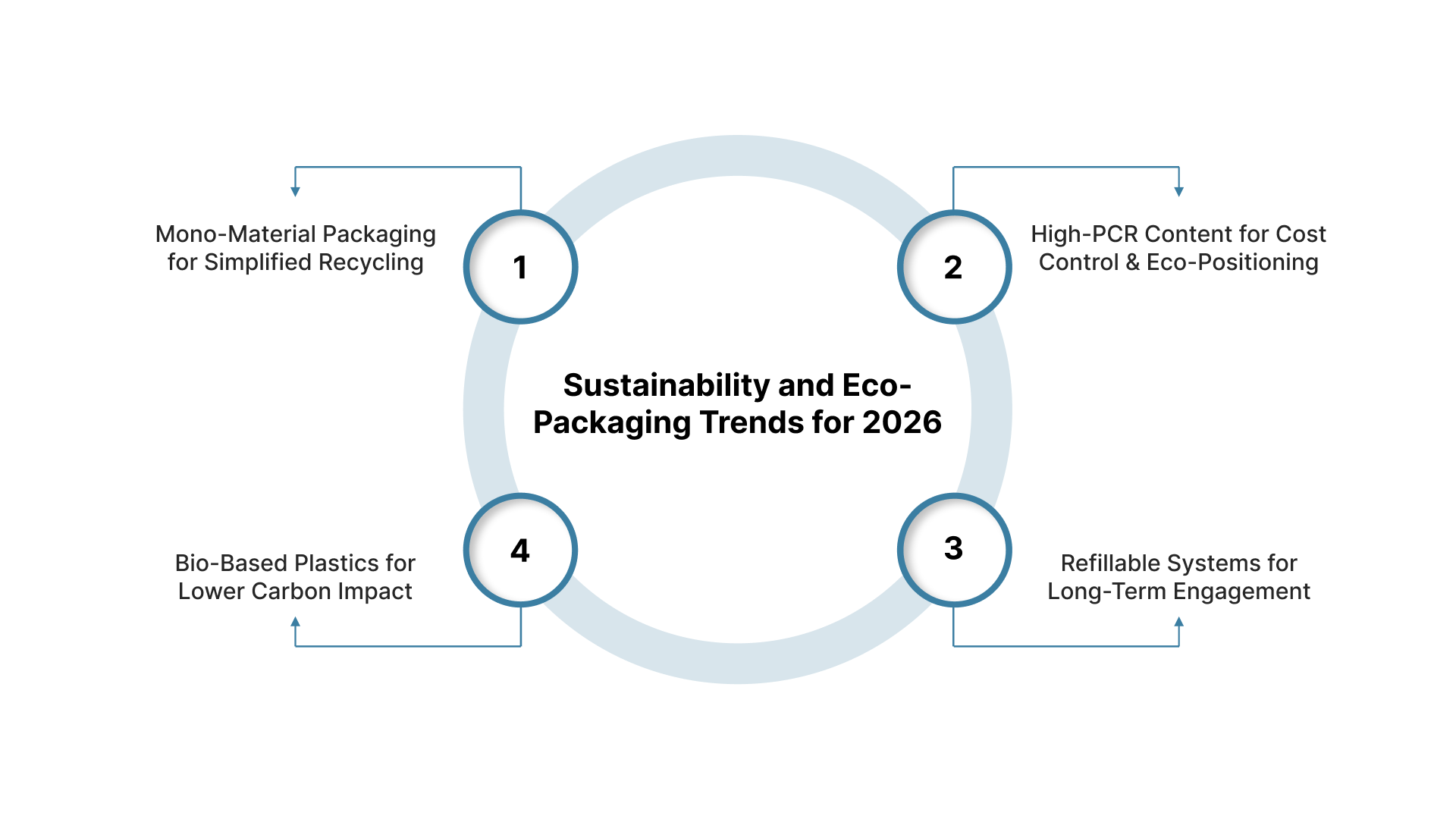
Sustainability is no longer an optional branding element. It affects sourcing stability, material cost, and long-term customer trust. The best cosmetic packaging solutions for 2026 blend eco-friendly materials with predictable manufacturing output.
1. Mono-Material Packaging for Simplified Recycling
Mono-material systems (all PET or all PP) reduce consumer confusion and improve recycling rates.
Operational Impact: Fewer bonded components improve AQL pass rates and simplify supplier sourcing.
2. High-PCR Content for Cost Control and Eco-Positioning
PCR reduces reliance on virgin resin, making brands less exposed to raw material price volatility.
Operational Impact: Requires tighter AQL checks due to color variation but improves long-term cost stability.
3. Refillable Systems for Long-Term Engagement
Refill pods reduce total plastic per transaction and appeal to sustainability-conscious consumers.
Operational Impact: Standardized refill dimensions help maintain consistent equipment uptime across SKUs.
4. Bio-Based Plastics for Lower Carbon Impact
Plant-derived materials (like sugarcane PE) perform similarly to conventional plastics with reduced environmental impact.
Operational Impact: Compatibility testing is necessary to confirm resin behavior during filling and storage.
With sustainability considerations integrated, brands can now choose the right packaging format for each product type with more clarity.
Packaging by Product Type
Matching packaging to the product's viscosity and usage pattern improves filling accuracy and customer experience.
Product Type | Recommended Packaging Format(s) | Design Inspiration/Function |
Serums / Active Ingredients | Glass Dropper Bottles (Dark/Opaque), Airless Pumps. | Luxury Minimalist Aesthetic; Airless pumps protect unstable ingredients (like vitamin C/Retinol) from oxidation to make sure of yield improvement. |
Creams/Lotions (Low Viscosity) | Pump Bottles (PET/HDPE), Tubes (PE/PCR). | Tubes offer precise dosing and minimal waste, supporting travel-friendly size demands. |
Face Masks/Scrubs (High Viscosity) | Wide-Mouth Jars (Glass/PP), Squeezable Tubes. | Jars offer premium presentation and easy access for finger application, aligning with multi-sensory experiences. |
Makeup (Foundation/Concealer) | Airless Pumps, Compacts with Modular Inserts. | Compacts with refillable magnetic pans support refillable packaging systems and longevity. |
Powders/Supplements | Stickpacks/Sachets, Jars with Sifters. | Stick packs support rapid Throughput on flexible packaging lines and offer single-dose convenience. |
Note: If you are unsure which container fits your viscosity or fill weight requirements, you can review how Respect Manufacturing evaluates component fit on automated filling lines.
Once the right formats are selected, many brands look for a partner who can support testing, filling, sourcing, and quality control. This is where a partner model like Respect Manufacturing becomes helpful.
How Respect Manufacturing Supports Packaging Quality
Some brands prefer a partner that manages packaging, filling, testing, and logistics through one workflow. Respect Manufacturing operates as a U.S.-based, FDA-registered, cGMP-aligned turnkey partner focused on quality, transparency, and predictable output.
Respect Manufacturing supports packaging stability with:
AQL checks on incoming components
Full traceability from materials to finished goods
This model helps brands reduce supplier risk, maintain lead time stability, and scale packaging programs more confidently.
If your team is planning packaging updates for 2026, you can explore how Respect Manufacturing supports formulation, component sourcing, filling, and final packaging.
Also Read: Top 10 Cosmetic Contract Manufacturers in USA 2025
Conclusion
Choosing the best cosmetic packaging requires a balance of sustainability, compatibility, MoCRA compliance, and manufacturing feasibility. When packaging aligns with cGMP systems and AQL requirements, brands gain predictable throughput, lower CPU, and stronger consumer trust.
Respect Manufacturing offers the end-to-end support needed to turn these packaging decisions into reliable, compliant production outcomes.
If your team is preparing new launches or updates. In that case, you can contact Respect Manufacturing, which supports material testing, sourcing, stability checks, filling, labeling, and turnkey packaging workflows for the U.S. market.
FAQs
1. How do I choose the best cosmetic packaging for my formula?
Focus on compatibility, AQL quality, fill-line performance, sustainability, and dispensing accuracy to maintain predictable throughput.
2. What packaging materials work best for actives like vitamin C or retinol?
Opaque glass, airless pumps, and aluminum components protect sensitive ingredients and support stability results.
3. How does MoCRA affect the best cosmetic packaging choices?
MoCRA requires accurate labeling, ingredient visibility, and adverse event contact details, so packaging must allow for expanded disclosures.
4. Why is mono-material packaging important for 2026?
It simplifies recycling, cuts CPU, and supports long-term sustainability goals with fewer components and lower sorting complexity.
5. Which KPIs improve when you select the best cosmetic packaging?
Equipment uptime, scrap rate, CPU, lead time stability, and customer return rates.