Launching a hair care brand in the United States is an exciting move, but it quickly becomes a technical process shaped by compliance, manufacturing requirements, and supply chain decisions. Many founders begin with a vision for formulas, branding, and customer experience. Still, once you move from idea to execution, you enter a regulated environment shaped by MoCRA, ingredient constraints, packaging specifications, and manufacturing KPIs.
The U.S. hair care market, according to Mordor Intelligence, is projected to reach $25.16 billion by 2030, driven by strong consumer demand for premium, science-backed, clean formulations. For emerging D2C brands generating $2M to $100M in revenue, long-term success depends on operational choices that protect product quality, minimize scrap rate, and maintain consistent production output.
This guide outlines the seven critical phases for starting and scaling your hair product line in the U.S. market, with a clear focus on manufacturing feasibility, compliance, and cost control.
Key Takeaways
Identify a scalable niche supported by data, consumer gaps, or ingredient opportunities.
Complete all Modernization of Cosmetics Regulation Act requirements, including FDA facility registration, product listing, and safety substantiation.
Choose packaging that aligns with automated filling lines and passes Acceptance Quality Limit (AQL) checks for incoming components.
Scale from bench sample to pilot batch to commercial run using controlled production steps.
Select a turnkey partner to reduce operational complexity, supplier risk, and lead-time variability.
Phase I: Market Strategy

Before investing in a formulation, the most important step is validating a niche that can scale. A niche must be specific enough to differentiate your brand but broad enough to support long-term SKU expansion.
A. Market Research and Target Audience Identification
Before deciding on formulas, confirm:
Hair type focus (straight, wavy, curly, coily)
Key concerns (damage repair, dryness, scalp sensitivity, buildup, frizz)
Purchase behavior (premium, clean-label, functional, salon-grade)
Price tolerance
Channel preference (D2C, Amazon, retail)
This clarity guides both formulation and CPU planning.
B. Modern Hair Care Trends Creating New Niches
For operations and product managers, market research defines the volume, velocity, and complexity of your product line. Focus on:
Scalp Health & Microbiome Care: Consumers now treat the scalp like facial skin, creating demand for niacinamide, ceramides, and gentle microbiome-supporting actives.
Textured Hair Solutions (Types 3–4): Textured hair requires specific oil-to-water ratios and conditioning agents. Precision in these ratios improves product yield and reduces batch variance.
Bond-Building & Damage Repair: Bond-repair ingredients (such as maleic complexes) justify premium price points but require strict efficacy testing to support claims.
Silicone-Free & Clean Label: Brands must replace silicones with alternatives that maintain slip and shine, requiring more intensive stability testing.
C. Developing Your Brand Identity
A strong brand identity aligns your formula, packaging, and messaging:
Core promise (clean, clinical, premium, textured-focused)
Visual identity (minimal, clinical, luxury, natural)
Packaging esthetic aligned with production feasibility
Tone and communication style
This identity will later influence label layout, component selection, and claim language.
D. Translating USP into Operational Requirements
Your USP must translate into a measurable product performance metric that your R&D partner can deliver. A USP must be actionable for the manufacturer:
If you promise sustainability, packaging needs to have high PCR content and use traceable suppliers.
If you promise bond repair, you need proven performance data to support MoCRA safety files.
Example: Instead of "Moisturizing Shampoo," define it as "A pH-balanced shampoo formulated with a post-biotic complex to support the scalp's microbiome, proven to reduce excess oil production by X% (data from efficacy testing)."
Once you know your audience and positioning, the next step is developing a stable formula that performs in production.
Phase II: Product Creation & R&D
R&D is where your brand identity becomes a real product. The formula must be effective, manufacturable, and stable across storage and shipping conditions.
A. Formulation Development: pH, Performance & Manufacturing Fit
Unlike skincare, haircare product formulation must balance two distinct needs: the scalp and the hair shaft. Hair care depends heavily on pH:
Scalp pH: The scalp (skin) functions best at a slightly acidic pH of 5.5.
Hair Cuticle pH: The hair cuticle (outer layer) is optimally sealed at a lower pH of 4.5.
Example: Shampoos need to cleanse (higher pH), while conditioners need to seal the cuticle (lower pH). Automated stainless steel mixers help maintain pH consistency, evenly blend actives, and protect batch integrity.
Understanding the Science of Hair Care Ingredients
A concise ingredient framework helps guide R&D:
Ingredient Group | Purpose |
Surfactants | Cleansing and foam (shampoos) |
Conditioning Agents | Slip and detangling (conditioners) |
Humectants | Moisture retention (glycerin, propanediol) |
Oils/Emollients | Softening and shine |
Proteins/Actives | Repair and strengthening |
Acids | pH control and cuticle sealing |
This guides your R&D team and influences manufacturing requirements.
Also Read: The 10 Essential Stages of Skincare Product Development
B. Testing to Prevent Failure Down the Line
Before any commercial run, formulations must pass rigorous testing.
Test Type | Purpose & Operational Impact | KPI Protected |
Stability Testing | Makes sure that the formula maintains its integrity (color, viscosity, scent, pH) when subjected to various temperature/humidity cycles. | Scrap Rate (avoids spoilage), Yield Improvement. |
Compatibility Testing | Confirms the formula does not degrade or react with the chosen primary packaging materials (e.g., bottle, pump liner). | Equipment Uptime (avoids line fouling), Cost Per Unit. |
Efficacy Testing | Measures the product's performance (e.g., frizz reduction, bond repair strength) to substantiate marketing claims. | Customer Lifetime Value, Marketing Compliance. |
Once your formula is validated and stable, compliance becomes the foundation for market entry.
Phase III: Compliance & Safety
Since 2022, the Modernization of Cosmetics Regulation Act (MoCRA) has significantly expanded the FDA's authority over cosmetics, including hair care. Non-compliance is a fast track to regulatory action and immediate supplier risk.
A. MoCRA Requirements for 2026 Launches
Before your product reaches the filling line, MoCRA establishes a set of mandatory steps that protect consumer safety and determine whether your launch can proceed smoothly.
FDA Facility Registration: Your manufacturer must be registered with the FDA.
Product Listing: Every SKU must be listed on the FDA's system with a full ingredient breakdown.
Safety Substantiation: You must maintain evidence that each product is safe for its intended use.
Adverse Event Reporting (AER): Serious adverse events (including significant hair loss or severe disfigurement) must be reported to the FDA within 15 days. Your label must include a US-based contact address or phone number for AER inquiries.
B. cGMP Expectations
Your manufacturer should follow cGMP principles:
Stainless steel equipment for contamination control
AQL checks on raw materials
Controlled documentation
Water filtration and microbial checks
With compliance ready, your next focus is packaging, which is a major driver of production stability and customer experience.
Note: In addition to FDA facility registration, sellers must obtain appropriate state or local business licenses to legally sell hair care products. Consult your state's cosmetic regulations to ensure compliance before launch.
Also Read: The Ultimate MOCRA Guide 2025: FDA Requirements & Timelines
Phase IV: Packaging & Component Sourcing
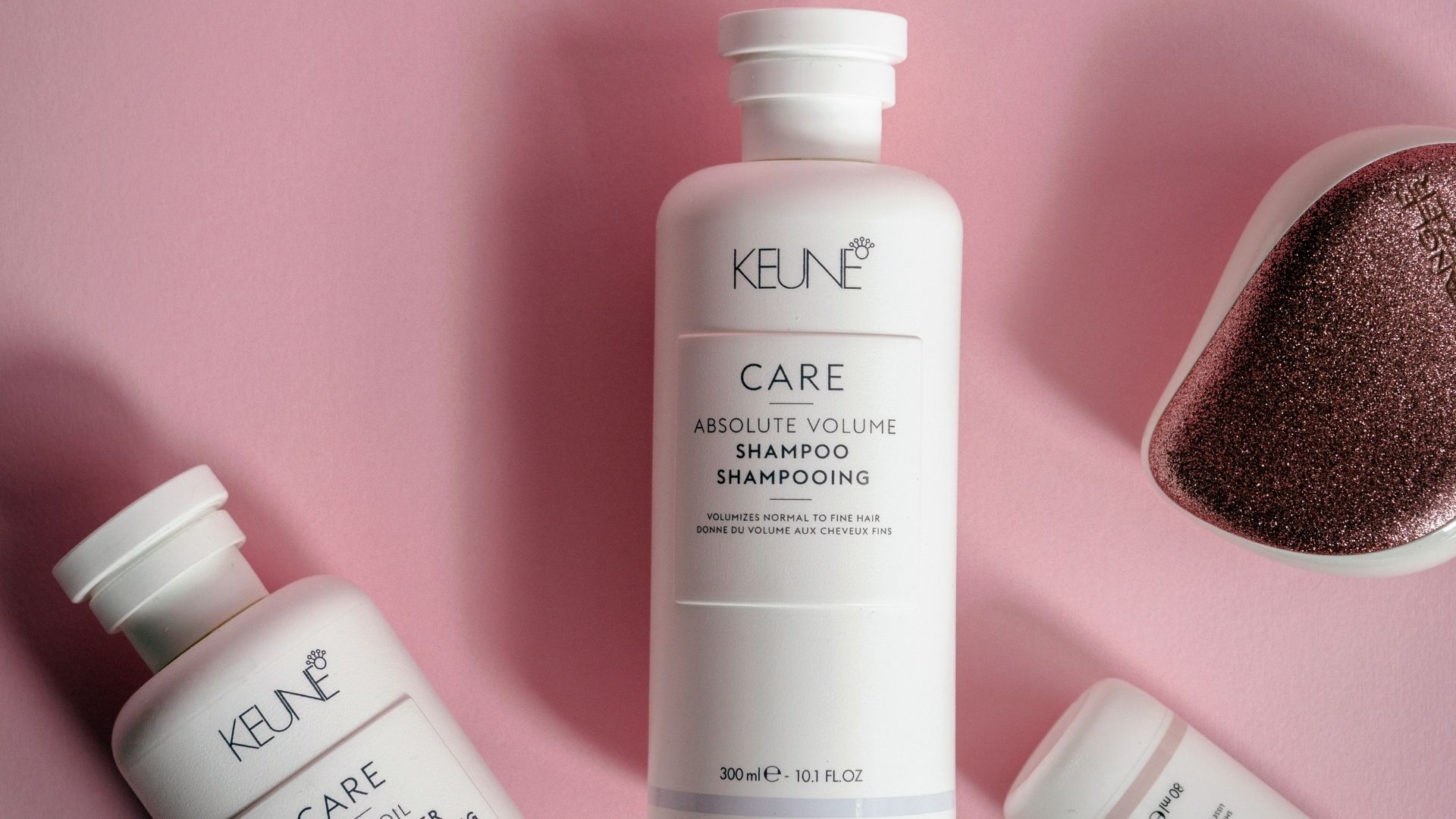
Packaging is not just visual. It influences component cost, machine compatibility, and scrap reduction.
A. Component Selection for Automated Filling
Automated filling systems depend on components that fit precisely and behave predictably. Selecting the right packaging is the first step in protecting equipment uptime.
Bottles and tubes must meet exact tolerances
Caps and closures must fit consistently to avoid line stoppages
Pumps must match the formula viscosity
Sustainability Consideration: Mono-material packaging (either PP or PET) supports recycling and reduces supplier risk.
B. Incoming Quality Control (AQL)
Manufacturers perform AQL checks on:
Wall thickness
Color consistency
Labeling
Fit and torque
Better AQL checks = fewer line issues = lower scrap rate.
With packaging secured, the next step is to scale production from a sample to a commercial batch.
Also Read: Private Label Hair Product Manufacturing for Salon Grade and Retail Brands
Phase V: Manufacturing Scale-Up
Moving from a bench batch to a commercial batch is the moment where quality and operational precision matter most. Launching a line requires precise financial planning that accounts for minimum order quantities (MOQs), inventory turnover, and marketing spend.
A. The Scale-Up Ladder
To avoid costly errors during mass production, hair care formulas must follow a step-by-step scale-up path that validates consistency at each stage.
Bench Sample (1–2 liters)
Pilot Batch (50–100 gallons)
Commercial Batch (full production run)
Each step reduces risk and sets accurate throughput expectations.
B. KPIs to Protect During Scale-Up
As production volume increases, the right KPIs help you maintain consistent quality and prevent unexpected issues during scale-up.
Equipment uptime
Scrap rate
Fill accuracy
Label accuracy
Cycle time consistency
As brands scale, vendor coordination becomes a significant bottleneck, making the turnkey model increasingly attractive.
Phase VI: Turnkey Partner Selection
A turnkey model removes operational burden and significantly reduces supplier risk, lead-time uncertainty, and administrative workload. A turnkey partner manages all steps:
Raw material sourcing
Packaging
Filling
Stability testing
Compliance
Logistics
Operational Advantages
One accountable partner
Lower Supplier Risk
More predictable lead times
Better CPU optimization
Faster speed to market
A single-source partner, such as Respect Manufacturing, manages all aspects of sourcing, decoration, logistics, and quality checks. This dramatically reduces operational complexity and mitigates supplier risk associated with coordinating multiple independent vendors.
Once your operational model is clear, the final step is validating your finances and preparing for launch.
Phase VII: Financial Planning & Go-to-Market

Launching a line demands structured financial planning that includes MOQs, stock management, and planned marketing expenses.
A. Finalizing CPU (Cost Per Unit)
Your manufacturer will provide a precise breakdown of formula cost, primary/secondary packaging cost, filling/labor cost, and testing cost. This must be calculated against your target retail price and desired margin. Your CPU must include:
Actives and raw materials
Packaging
Labor/filling
Compliance testing
Overhead
Logistics
Note: Startup costs for beauty brands range from $2,000 to more than $1 million, depending on scope, as per Black Bird Skin Care. Typical expenses include market research ($500 to $15,000), product development and compliance ($2,000 to $20,000+), and business setup or legal fees ($50 to $10,000). Managing these early costs carefully supports long-term growth.
B. Inventory Strategy
Your inventory plan must match:
Lead-time stability by coordinating with suppliers
Retailer or D2C volume expectations through sales forecasting
MOQ constraints by negotiating flexible orders
Launch sequencing to optimize stock availability
C. Marketing the Modern Hair Care Brand
Your brand messaging must align with the operational realities of your product formulation.
Ingredient Transparency: Consumers demand to know what they are putting on their hair. Leverage your Safety Substantiation documentation to clearly communicate the purpose of every ingredient on your website.
Sustainability Claims: All claims (e.g., "recyclable," "vegan," "clean") must be verifiable. Your manufacturer's selection of mono-material packaging and PCR content is the foundation for authentic environmental claims.
Digital Presence: Build an e-commerce platform with a focus on education and personalized diagnosis (e.g., a quiz to determine a customer's hair type/porosity).
With all phases in place, your brand is ready to scale.
Note: Funding options such as bootstrapping, angel investment, beauty-focused venture funds, purchase order financing, small business loans, and inventory financing can help support early production runs and component MOQ requirements.
Conclusion
Successfully launching your own hair product line in 2026 demands a shift in focus from mere brand identity to operational excellence and regulatory certainty.
Building a successful hair care brand requires more than a great idea. It demands formulas that scale, packaging that works on automated lines, and compliance that protects your business.
By focusing on manufacturing feasibility, MoCRA readiness, controlled throughput, and detailed cost planning, your brand can enter the U.S. market with confidence.
If your team is preparing for launch, contact Respect Manufacturing for material testing, sourcing, filling, labeling, and turnkey hair-care manufacturing for the U.S. market.
FAQs
1. What is the difference between a contract manufacturer and a turnkey partner?
A contract manufacturer focuses only on production, while a turnkey partner handles formulation, sourcing, testing, compliance, filling, and logistics under one system.
2. What operational factors should I confirm before choosing a manufacturer?
Check for FDA facility registration, cGMP alignment, stability testing capability, AQL procedures, and experience with hair care formulations. These elements indicate whether the partner can support consistent throughput and protect your launch timeline.
3. What packaging features matter most for automated filling lines?
Select packaging with stable dimensions, consistent resin quality, and pumps or closures matched to your formula viscosity. This protects equipment uptime and lowers the Scrap Rate during filling.
4. When should I run a pilot batch, and why is it important?
A pilot batch is essential once stability and compatibility tests are complete. It reveals real-world throughput, fill accuracy, and labeling performance before committing to full-scale production.
5. How can emerging brands control Cost Per Unit (CPU) when launching a hair care line?
CPU becomes more predictable when formulation, testing, packaging, sourcing, and manufacturing are consolidated under a turnkey partner. This removes extra vendor coordination and reduces hidden costs linked to delays or component mismatches.